
"rocky mountains"
200 article(s) found

Description of Flavor and introduction of Historical Story of Solar Coffee beans in Olian specialty area of Oriente, Guatemala
Professional coffee knowledge exchange more coffee bean information please follow the coffee workshop (Wechat official account cafe_style) Guatemalan coffee history Guatemala Guatemala coffee was introduced by missionaries in 1750. It was only in 1860 that the Germans expanded the entire industry. To date, there are about 60000 family farms operating in Guatemala
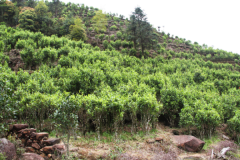
Which is better, Milan fragrant single fir or Zhilan fragrant single fir? How much is Chaozhou Milan incense per jin?
The first to exist may be homogenous single-clump oolong teas that proliferate through their seeds. As a result, many different varieties of single-clump oolong tea have been developed at an early stage. These different tastes and aroma characteristics are often referred to as fragrances in the context of Dancong tea varieties. Today, this fragrance remains unchanged because of the common practice of propagation by cuttings. Tea connoisseurs at least

A brief introduction to the flavor, taste and aroma characteristics of Galapagos boutique coffee beans
Other coffees worth mentioning are Juan Vinas,PR, H.Tournon, Windmill,SHB, Monte bello and Ssnta Rosa. Fine coffee is generally grown in Geredia and the central canyon. Another eye-catching coffee is Sarchi coffee (

A brief introduction to the origin, development, history and culture of Galapagos boutique coffee beans
The Arabian Coffee Tree was first introduced to Ecuador in 1952 and its coffee is of good quality, especially the coffee harvested in early June. Ecuadorian coffee beans can be divided into two varieties: Galapagos and Gigante, both of which have the characteristics of large granules and heavy weight. Ecuadorian coffee can be divided into first class (No.1) and super excellent (Extra Superior) according to its quality.

A brief introduction to the cultivation of pure aromatic Galapagos boutique coffee beans, geographical location, climate and altitude
Central mountain: after Colombia entered Ecuador, the Andes is divided into the eastern and western Cordillera mountains, with a plateau high in the north and low in the south, averaging between 2500 and 3000 meters above sea level. The Andes run through the middle of the border. The ridges crisscross, dividing the plateau into more than ten intermountain basins. The most important are the Quito basin and the Cuenca basin in the south. Internal fire
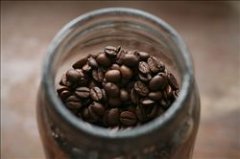
Fragrant Hassanda Coffee Manor, Ecuador, Origin, Development, History and Culture of Fine Coffee beans
Flavor: balanced acidity, aromatic fragrance recommended roasting methods: medium to deep roasting, can be made into high-quality mixed coffee, suitable for multi-purpose evaluation: generally the best Ecuadorian coffee is grown on the island of San Cristobal in the Galapagos Islands, here has the unique natural geographical conditions for giving birth to the best quality coffee in the world. A cup of Galapagos coffee, Jude

A brief introduction to the market price of boutique coffee beans in Santa Cruz Manor, Ecuador.
Ecuador is the highest Arabian coffee plantation in the world. Since the coffee tree was first introduced into Ecuador in 1875, the quality of its coffee has remained unchanged for 100 years, especially the coffee harvested in early June every year, which is known as the best coffee in the world. Ecuadorian coffee beans are divided into Galapagos and Segante, both of which have large granules and large quantities.
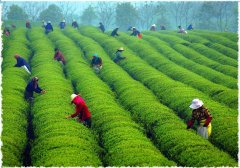
What is the Ten Brands of Wuyi Rock Tea Dahongpao? description of the taste and aroma of Dahongpao
As one of the most famous tea in China, Dahongpao is surrounded by myths and legends. Although magical stories have helped to build the reputation of this tea as a rare and valuable commodity, they rarely say anything about the taste and quality of any kind of tea. So what makes Dahongpao so special? What does it mean when a product is labeled Dahongpao? Dahongpao

A brief introduction to the description of flavor and flavor characteristics of Galapagos boutique coffee beans with balanced acidity
In 1875, 340 years after Freitoma de Belanga discovered the island, a native named Kovos came to St. Cristobal, where he established the Hasunda Coffee Garden and planted about 100 hectares of Arabian bourbon coffee trees. As the plantation is located between 140m and 275m above sea level, the climate is equivalent to that between 915m and 1830 m in the interior.

Introduction to the characteristics of Santa Cruz Manor
Ecuador, formerly part of the Inca empire. It was colonized by Spain in 1532. Independence was declared on August 10, 1809, but it was still occupied by the Spanish colonial army. It was completely freed from Spanish colonial rule in 1822. Joined the Republic of Greater Columbia in 1825. After the disintegration of Great Colombia in 1830, the Republic of Ecuador was proclaimed. Since the founding of the people's Republic of China, the political situation of Ecuador has been in turmoil.

A brief introduction to the treatment method of grinding degree and baking degree of Galapagos boutique coffee beans with balanced acidity
The country's coffee industry, originally controlled by the Costa Rican Coffee Industry Company (Instituto del Caf deCosta Rica, ICAFE), has been taken over by the official Coffee Committee (Oficinadel Caf). ES Coffee is a clean organic coffee grown on the slopes of the Andes in Latin America. It is 100% pure coffee, through efforts to improve the cultivation
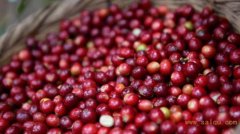
A brief introduction to the cultivation of Galapagos boutique coffee beans with pleasant aroma, geographical location, climate and altitude
ES Coffee is a clean organic coffee grown on the slopes of the Andes in Latin America. It is 100% pure coffee, and the quality of our coffee has been guaranteed and improved by working to improve the economic and working conditions of the plantation, while maintaining the small scale of the coffee plantation and the biodiversity in the hospital. In addition, it is a very important economic source of coffee origin.

A brief introduction to the flavor and flavor characteristics of Galapagos boutique coffee beans
ES Coffee is a clean organic coffee grown on the slopes of the Andes in Latin America. It is 100% pure coffee, and the quality of our coffee has been guaranteed and improved by working to improve the economic and working conditions of the plantation, while maintaining the small scale of the coffee plantation and the biodiversity in the hospital. In addition, it is a very important economic source of coffee origin.

The history of Yemeni coffee beans the change of the meaning of mocha the characteristics of Yemeni coffee
The cornerstone of coffee history: since 1536 in Yemen, most of the coffee sold to Europe and Turkey comes from Yemeni coffee. Historians are not sure when Yemen started growing coffee. Ethiopia is widely believed to be the birthplace of coffee, although it has not been confirmed whether there is also Arabica, which originated entirely in Yemen. However, some historians also infer that in the 13th or 14th century

Description of the flavor, taste and aroma characteristics of boutique coffee beans in the Equatorial country of Ecuador Coffee Hassanda Manor
In 1978, the Galapagos Islands were declared a World Heritage site by the United Nations Educational, Scientific and Cultural Organization. The archipelago is called a living museum of biological evolution and a melting pot of marine life, and Darwin's theory of evolution was inspired by the Galapagos Islands. Most countries in the world produce only one kind of coffee beans, while Ecuador is one of the few countries in the world that can produce Arabica coffee beans at the same time.

A brief introduction to the treatment method of Grinding degree and Baking degree of Galapagos Fine Coffee beans
Minita), which is owned by the last three generations of the McAlpine family in England. In fact, this land can produce more than 450 tons of coffee a year. But Tarasu Latin American coffee is grown without artificial fertilizers or insecticides, and its harvesting and selection are done by hand, in order to avoid air spray selection in a certain process.

A brief introduction to the description of flavor and aroma characteristics of Galapagos boutique coffee beans with sweet in sour
In 1875, 340 years after Freitoma de Belanga discovered the island, a native named Kovos came to St. Cristobal, where he established the Hasunda Coffee Garden and planted about 100 hectares of Arabian bourbon coffee trees. As the plantation is located between 140m and 275m above sea level, the climate is equivalent to that between 915m and 1830 m in the interior.

A brief introduction to the treatment method of Grinding degree and Baking degree of Galapagos Fine Coffee beans with slight Flower and Fruit aroma
Among the exported coffee, those products that are considered to be of substandard quality are colored with blue vegetable dyes and then transferred back to China for sale. Coffee consumed domestically (dyed blue or undyed) accounts for about 10% of total production, and local per capita coffee consumption is twice that of Italy or the United States. Tarasu is located in the south of the country's capital San Jos, and it is the most valued in the country.

A brief introduction to the planting Market Price of Galapagos Fine Coffee Bean varieties with slight Flower and Fruit fragrance
The Arabian Coffee Tree was first introduced to Ecuador in 1952 and its coffee is of good quality, especially the coffee harvested in early June. Ecuadorian coffee beans can be divided into two varieties: Galapagos and Gigante, both of which have the characteristics of large particles and heavy weight. Ecuadorian coffee can be divided into first class (No.1) and super excellent (Extra) according to its quality.

A brief introduction to the history and culture of the origin and development of Galapagos boutique coffee beans with a faint fragrance of flowers and fruit
The Arabian Coffee Tree was first introduced to Ecuador in 1952 and its coffee is of good quality, especially the coffee harvested in early June. Ecuadorian coffee beans can be divided into two varieties: Galapagos and Gigante, both of which have the characteristics of large particles and heavy weight. Ecuadorian coffee can be divided into first class (No.1) and super excellent (Extra) according to its quality.